SM-65 | United States Air Force
Atlas Intercontinental Ballistic Missile
Find an Atlas missile site, compare the D, E, and F launch systems, and follow the history of America's first operational ICBM from its first alert through retirement.

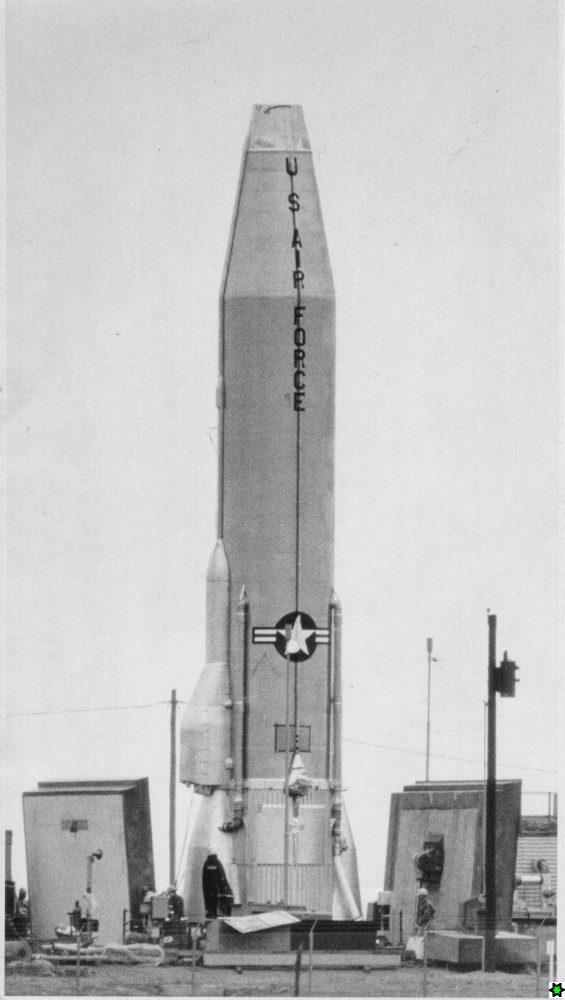
General Bernard Schriever beside an Atlas missile. U.S. Air Force photograph.
Start with a place
Use the site directory to browse individual launch facilities by state and parent Air Force base.
Three ways to base an Atlas
The launch structures changed more dramatically than the missile's familiar silhouette.
Explore the deployment fields
These base histories explain how the dispersed launch sites worked as missile squadrons.
Atlas D
Early shared launch complexes.
Atlas E
Dispersed, partly buried coffin launchers.
Atlas F, central fields
Vertical silo complexes in the Great Plains and Southwest.
Atlas F, northeastern field
New York and Vermont launch sites connected to Plattsburgh.
Follow the Atlas story
Development, deployment, construction, operations, and the physical remains of the sites.
A short service, a lasting footprint
Atlas entered service during the first, fast-moving years of the American ICBM program. Its thin stainless-steel airframe depended on internal pressure, and its liquid-oxygen system required demanding ground support. The D, E, and F deployments show how quickly the Air Force moved from exposed launchers toward hardened, dispersed facilities.
Atlas left strategic service by 1965 as newer missile systems took over. Former launch areas, buried shelters, silos, access roads, and support facilities still shape many local landscapes. Their later ownership, access, and environmental histories vary from site to site.
Find an individual Atlas launch site